Iran Selects New Hardline Leader

Fourteen days into the U.S.-Israel war on Iran, at least 20 countries are now militarily involved in some capacity. Iran has struck targets in at least 10 countries. France has deployed about a dozen naval vessels, including its aircraft carrier strike group, to various locations in the Mediterranean; Britain has a destroyer warship in the region after an Iranian drone struck a U.K. air base on Cyprus; and Turkey has shot down two Iranian missiles in NATO airspace. Russia has reportedly been sharing satellite imagery of U.S. warships with Iran, while Ukraine has sent specialists and interceptors to help American allies. China is calling for a ceasefire, while U.S. intelligence suggests it may be quietly preparing to supply Iran with financial aid and missile components.
It appears Iran's navy is largely destroyed. Its missile stockpiles are significantly degraded, and its military industry is badly damaged. But the war's ultimate objectives remain unmet: the 450 kilograms of highly enriched uranium at Iran's nuclear facilities have not been secured, and Pickaxe Mountain — a fortified underground facility near Natanz, potentially buried 30 stories deep — has not been struck.
Trump told G7 leaders on Wednesday that he believes Iran is “about to surrender” and told Axios there is “practically nothing left to target.” But Iran's new supreme leader issued his first public statement the next day vowing to keep fighting, and the regime has shown no signs of imminent collapse.
A New Iranian Supreme Leader — Wounded and Defiant
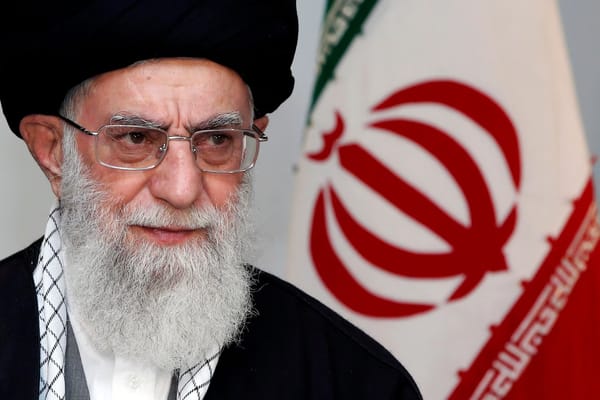
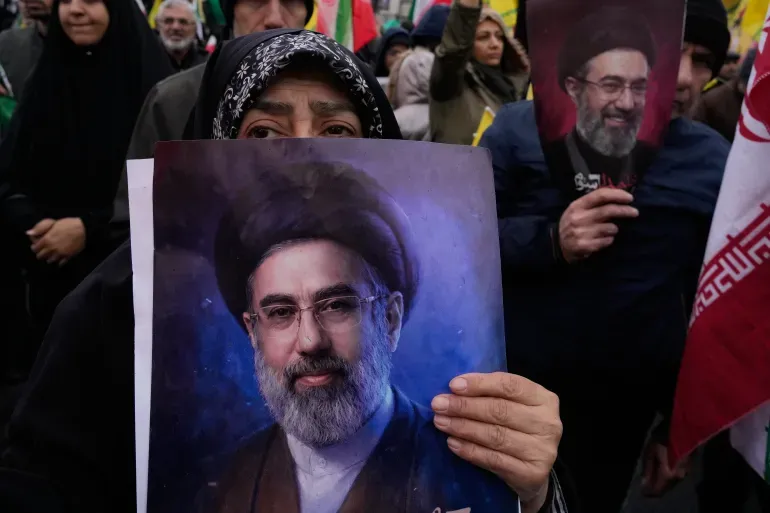
Mojtaba Khamenei, son of the slain supreme leader and a known hard-liner, was named to succeed his father, with crowds gathering in Tehran to celebrate the announcement as an act of defiance toward those attacking Iran. But Iran’s new leader has not been seen in public or on video since being named three days ago. The New York Times reports he was injured on the first day of strikes, and Defense Secretary Pete Hegseth stated Saturday that Khamenei is “wounded and likely disfigured.” His first communication was a statement read on State television with no accompanying video, vowing revenge and warning that attacks on U.S. bases will continue unless they shut down. President Trump said Friday he was unhappy with the choice, saying he believes it “is going to lead to more of the same problem for the country,” but declined to say whether the U.S. and Israel were planning to target him.
More U.S. Service Members Dead
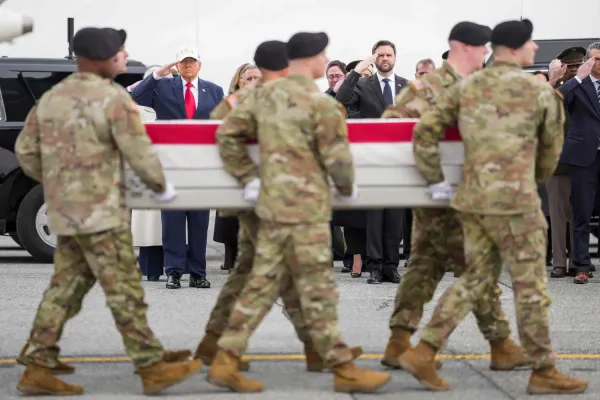
A KC-135 refueling aircraft crashed in western Iraq during Operation Epic Fury, killing all 6 crew members aboard. U.S. Central Command said the crash was not due to hostile or friendly fire.
Army Sergeant Benjamin N. Pennington, 26, of Glendale, Kentucky died after being wounded in the Iranian attack on Prince Sultan Air Base in Saudi Arabia on March 1st that killed 6 other reservists the week before last.
American Tomahawk Hits Iranian Girls' School
A preliminary U.S. military investigation determined this week that America is responsible for a Tomahawk missile that struck the Shajarah Tayyebeh girls’ elementary school in Iran, killing between 165 and 180 — most of them children aged 7 to 12. Investigators found that U.S. Central Command used outdated Defense Intelligence Agency targeting data; the school had previously been part of a nearby military compound.
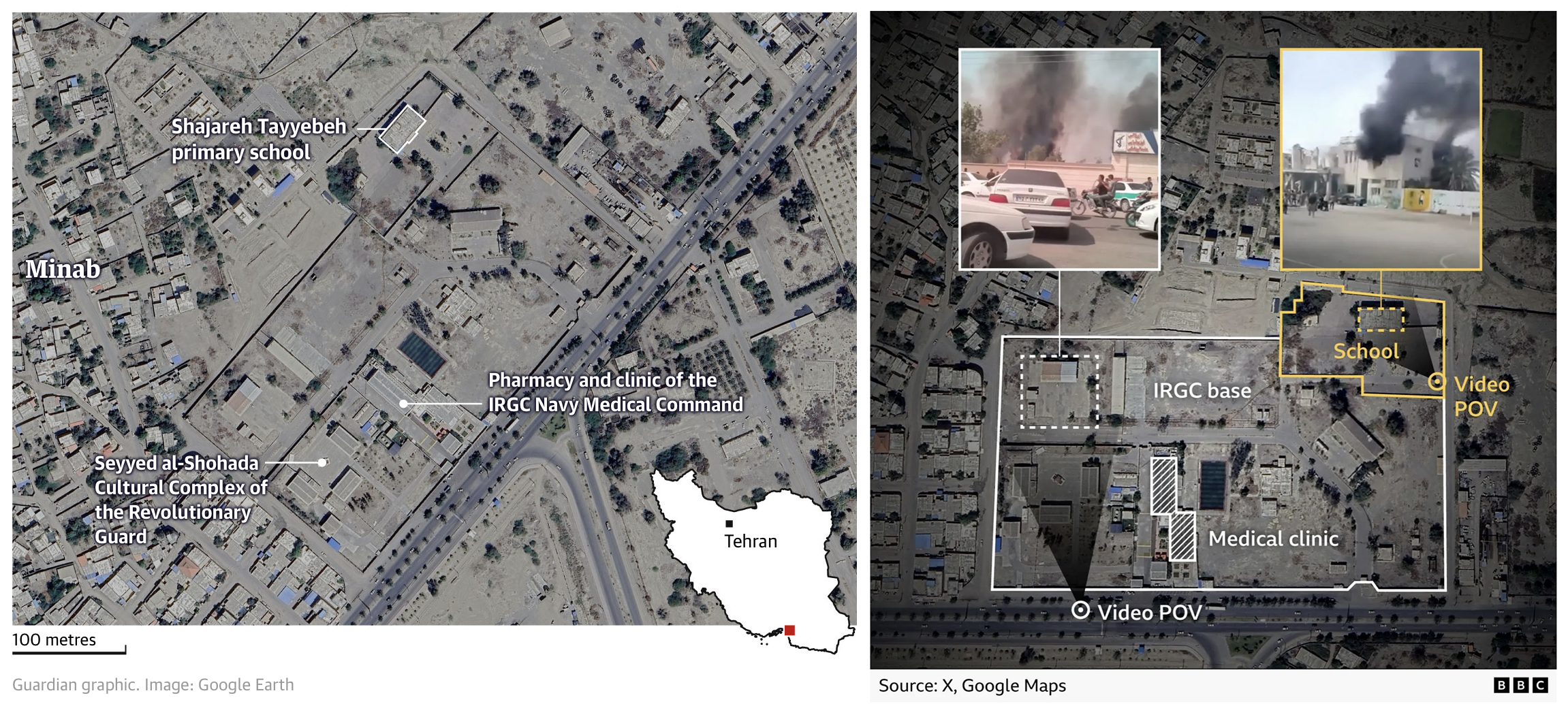
The White House initially suggested without evidence that Iran may have bombed its own school, or that someone else must have gotten Tomahawk missiles (the U.S. is the only one with them), while Senator John Kennedy broke ranks Monday with a direct apology: "It was terrible. We made a mistake . . . . I’m just so sorry it happened."
Cracks in the Alliance
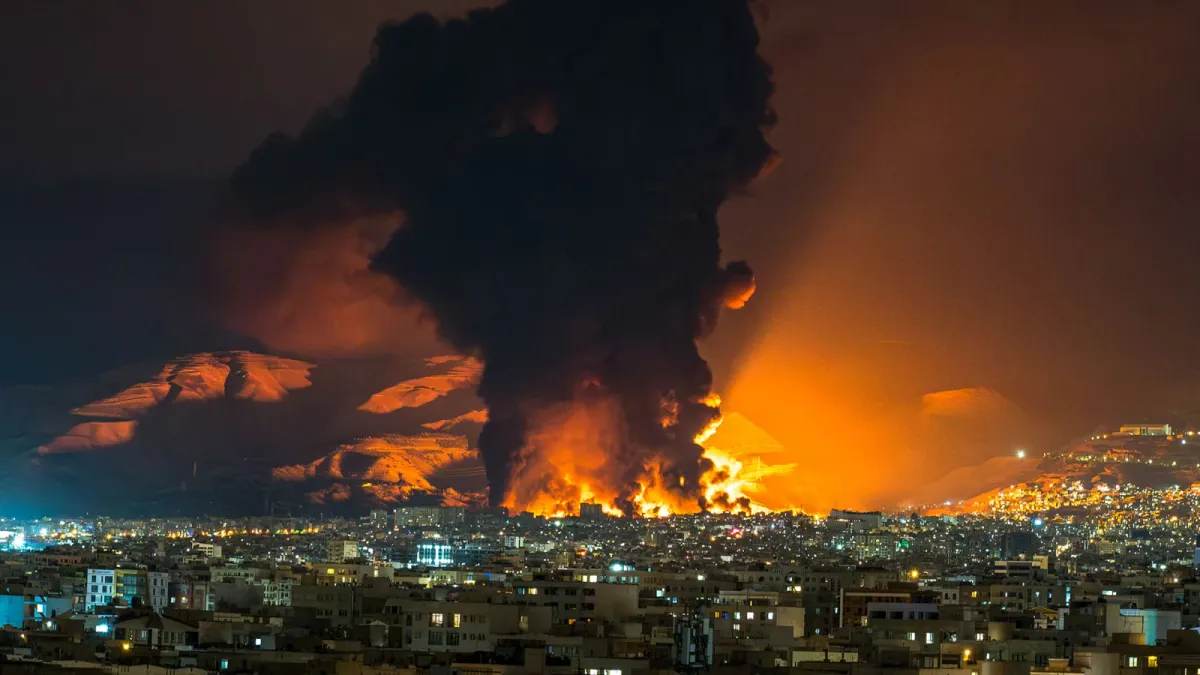
Axios reports that Israeli strikes on 30 Iranian fuel depots this week went far beyond what the U.S. had been notified to expect, blanketing Tehran in toxic smoke and triggering the first significant disagreement between the allies. A senior U.S. official said, “We don't think it was a good idea," and a Trump adviser said the President “doesn't like the attack.” The U.S. has now formally asked Israel to stop striking Iranian energy facilities, the first time Washington has sought to restrain Israel since the war began, citing concerns about Iranian public opinion, spiking oil prices, and Gulf state retaliation.
Gas and Oil Prices
The Strait of Hormuz — through which roughly 20% of the world's oil normally flows — has been effectively shut to commercial shipping, and Iran has begun laying mines there. U.S. forces sank 16 Iranian minelayers this week, and President Trump issued an ultimatum demanding their removal.
Brent oil futures closed at over $100/barrel, and pump prices are up ~21% since the war began, with the national average currently at $3.63 per gallon.
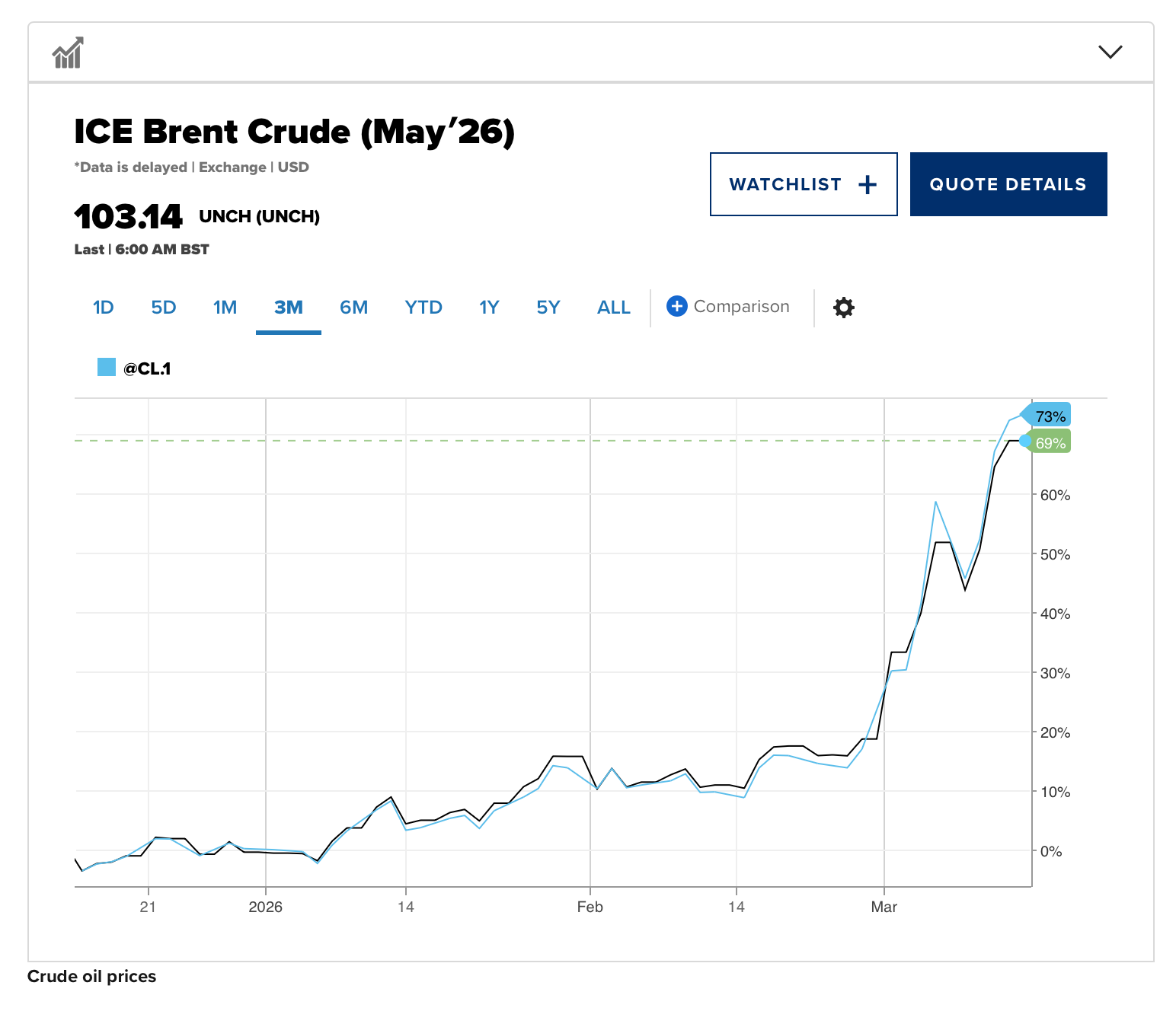
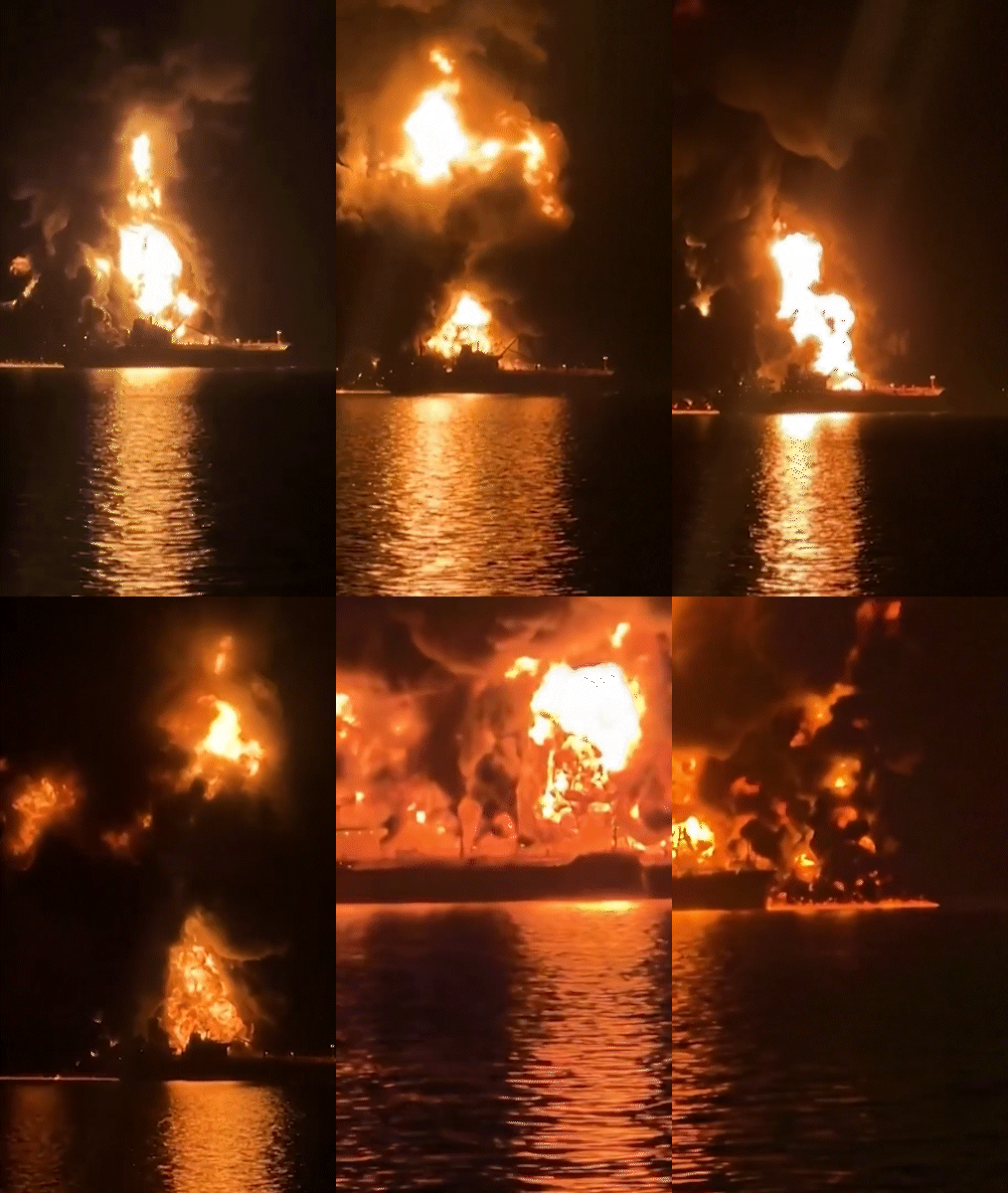
Iraq suspended oil terminal operations after two tankers were attacked off its coast, as Energy Secretary Chris Wright saidFriday the Navy is “simply not ready” to escort tankers. To ease prices, President Trump lifted sanctions on Russian oil and participated in the largest emergency oil reserve release in history — 400 million barrels globally, including 172 million from the U.S. Strategic Petroleum Reserve.
More News
🗺️ China plots tech dominance: Beijing released its 15th five-year strategic plan this week, laying out an ambitious roadmap to accelerate scientific breakthroughs and embed AI throughout its industrial economy, with targets spanning biomedicine, quantum tech, nuclear fusion, brain-computer interfaces, and AI-powered humanoid robots — framing tech dominance as a national security imperative.
💣 Attacks in Michigan & New York: An armed man rammed his car into Temple Israel in West Bloomfield Township, Michigan on Thursday, driving into a hallway before his vehicle caught fire; security shot him dead. None of the 140 children or staff were seriously harmed, though one security guard was knocked unconscious. The Department of Homeland Security on Friday identified the suspect as Ayman Ghazali, a 50-year-old Lebanese-American. Two of his brothers, plus a niece and nephew, were recently killed in an Israeli airstrike on a Lebanese town.
And two men were charged with attempting to detonate explosive devices outside Gracie Mansion, the New York City mayoral residence, who told police they were motivated by ISIS.
🏠 Senate votes to block Wall Street home buying: The Senate passed the bipartisan 21st Century ROAD to Housing Act on Thursday, which would bar Wall Street investors from purchasing single-family homes, with the bill now heading to the House. Co-sponsored by Elizabeth Warren and Tim Scott, it targets one driver of America's estimated 5.5-million-home shortage — a crisis that has pushed the average first-time buyer's age to 40.