State of the Iran War

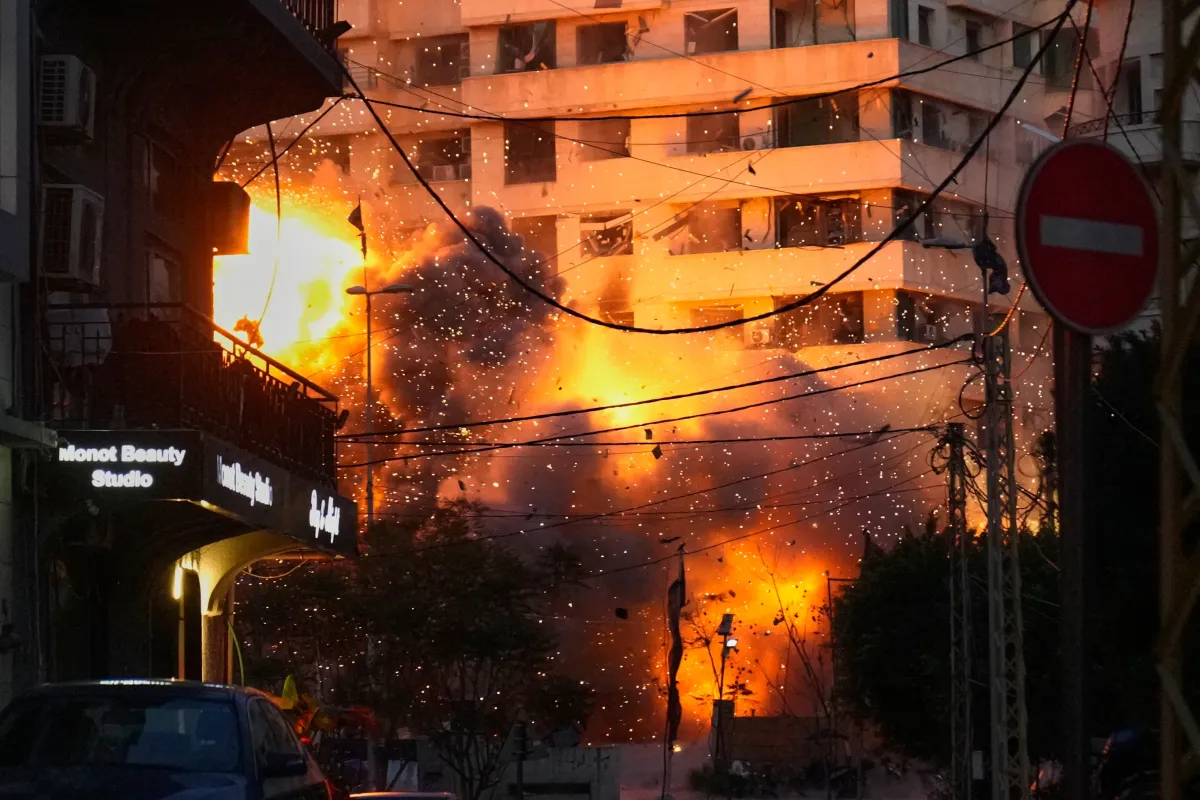
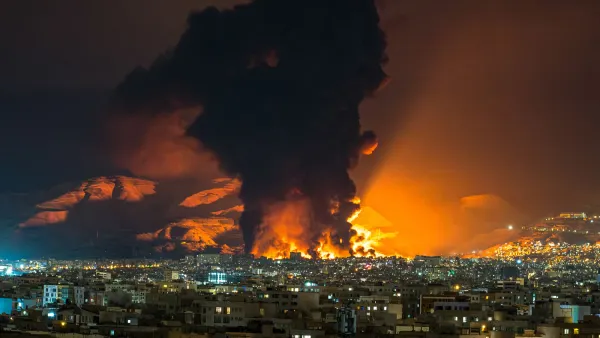
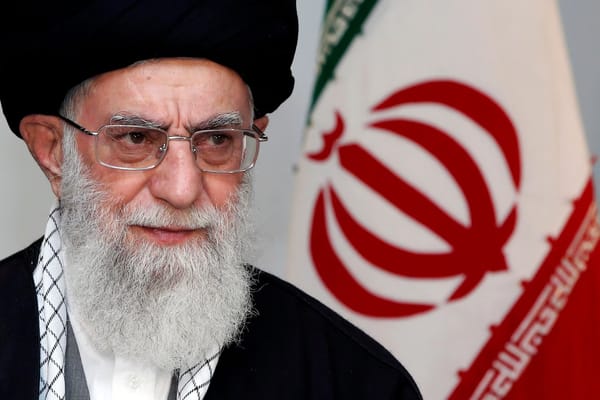
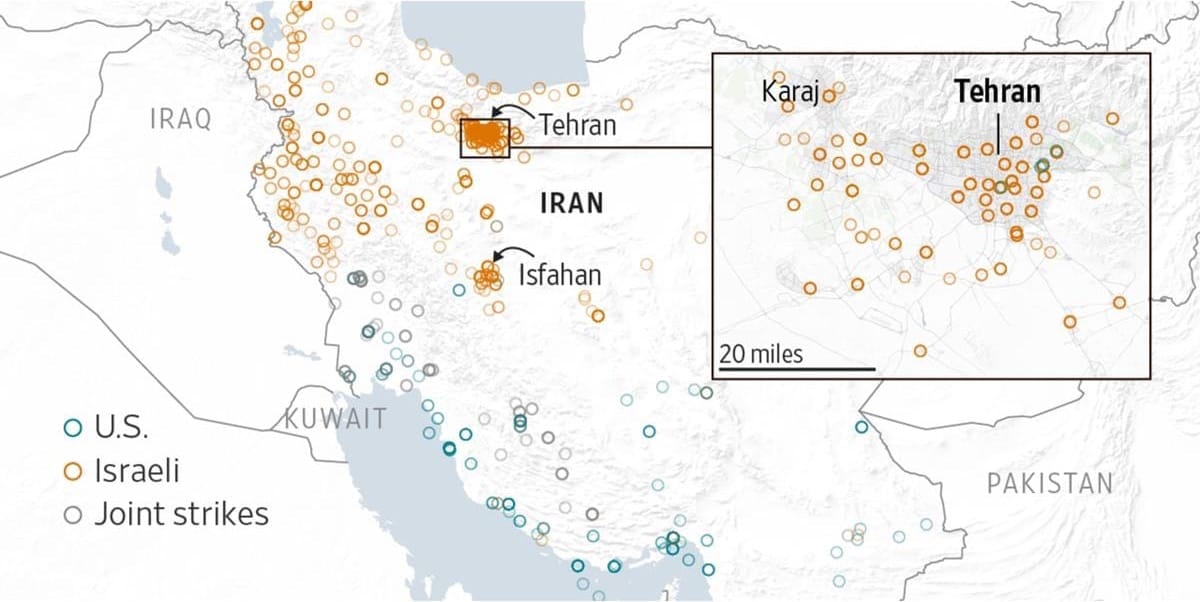
Nearly three weeks into Operation Epic Fury, the U.S. finds itself in a conflict that, at least on paper, looks like military success. Reportedly, Iran's air force has been rendered nearly useless, and its anti-aircraft systems have been largely destroyed, leaving the skies open to the U.S. and Israel. Iran’s navy is underwater. The Ayatollah and several senior officials are dead. President Trump declared Thursday on Truth Social that Iran “is totally defeated and wants a deal—But not a deal that I would accept!” Israel’s Prime Minister said on Thursday that Iran no longer has the ability to enrich uranium or make ballistic missiles, seemingly declaring that two of America and Israel’s stated top goals for this war have been accomplished.
Yet the Strait of Hormuz remains closed, trapping Gulf oil and keeping oil prices over $100/barrel—and much of the Iranian Islamic regime has stayed alive. And on Friday, according to multiple U.S. officials, Iran fired two intermediate-range ballistic missiles at Diego Garcia, a joint U.S.-U.K. military base in the middle of the Indian Ocean. Neither of the missiles hit the base (one failed, and the other may have been intercepted), but the move reveals that Iran can reach closer to 2,500 miles—nearly twice as far as Iran had stated just last month. This puts much of Europe, including London and Paris, within range of their missiles.
Based on timelines mentioned by President Trump and his aides, the administration expected an intense military operation lasting 4–6 weeks. That makes April 1 (Day 33 of the war) a reality check moment.
The cost so far: National Economic Council head Kevin Hassett confirmed Sunday that the U.S. has spent $12 billion in just over two weeks of fighting—and that figure is about to look modest. The Pentagon has reportedly asked the White House to approve over $200 billion in additional war funding, on top of the $839 billion Congress already approved for defense in fiscal year 2026. Senator Roger Marshall called the $200 billion figure “a little tall” and said the Pentagon would need to first explain to Capitol Hill what the money would be spent on. Any supplemental request will need at least 60 Senate votes to pass, likely making a vote on increased spending a referendum on the war (a declaration of war was not presented to Congress on the outset of the conflict).
Allies say no to Hormuz coalition: The majority of NATO members informed the White House Tuesday that they want no part in a proposed international armada to reopen the Strait of Hormuz—the closure of which has become the war's central crisis. Germany's defense minister said Thursday, “This is not our war.” Britain's Keir Starmer said his country “will not be drawn into the wider war,” and France and Poland echoed similar positions. President Trump had sought participation from the U.K., France, Germany, Italy, Australia, Canada, Gulf states, Jordan, Japan, and South Korea. He responded to the refusals with defiance, posting, “WE DO NOT NEED THE HELP OF ANYONE!” on Truth Social—although he continued calling on other nations to help secure the strait. On Saturday night, President Trump said on Truth Social that if Iran doesn’t open the Strait of Hormuz within 48 hours, he will “obliterate” their power plants, which would plunge millions into darkness and likely trigger a humanitarian catastrophe.
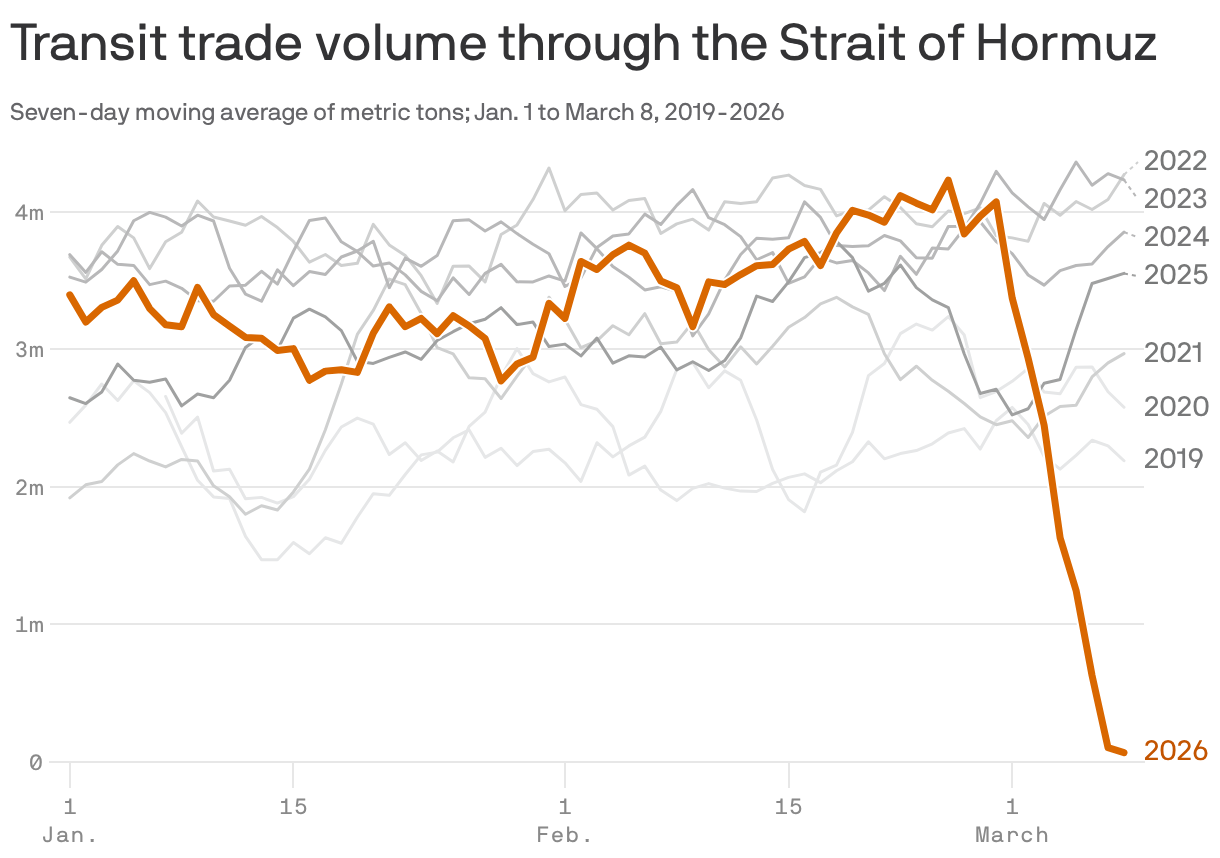
Effects abroad: The ripple effects of the war are being felt far beyond the Middle East. Countries across Asia are taking dramatic emergency measures. Bangladesh closed universities early for Ramadan, South Korea capped gas prices for the first time in nearly three decades, Thailand is encouraging remote work to save on gas, and Pakistan and Philippinesmandated a 4-day work week for government offices. Back home, jet fuel prices are up roughly 60% this month, airlines are already raising fares, and airport security lines have grown dangerously long as a partial government shutdown leaves TSA workers without pay—a compounding travel nightmare with spring break underway and the 2026 World Cup approaching (more below).
A little help from friends: Iranian Foreign Minister Abbas Araghchi confirmed Saturday that Russia and China are providing Iran “military cooperation,” confirming what many had suspected and reported about the geopolitical dimensions of the conflict deepening behind the scenes.
Israel kills more top Iranians: Israel continued its efforts to target high-ranking Iranian officials, reportedly killing Iran’s top security official—Ali Larijani, intelligence minister Esmail Khatib, and Gholamreza Soleimani, head of the Basij militia (considered responsible for the killing of tens of thousands of Iranian civilians in January). Then on Wednesday, Israel struck Iran's South Pars LNG gas field—one of the most economically significant attacks of the war—prompting Iranian retaliation against Gulf neighbors’ energy facilities and a sharp spike in LNG prices. Trump posted furiously that the U.S. “knew nothing about this particular attack” and ordered Israel to make “NO MORE ATTACKS” on similar targets. Israel disputed that account, saying the strike was coordinated in advance.
Dissent from within: Joe Kent, director of the National Counterterrorism Center and a top aide to intelligence director Tulsi Gabbard, resigned Tuesday—becoming the first senior administration official to break publicly with the war. In his resignation letter, Kent wrote that “Iran posed no imminent threat to our nation” and that the conflict was launched “due to pressure from Israel.” The White House immediately branded him “a known leaker,” and a report soon followed that the FBI had been investigating him for months on suspicion of leaking classified information. Supporters of Kent called the the investigation political retribution.
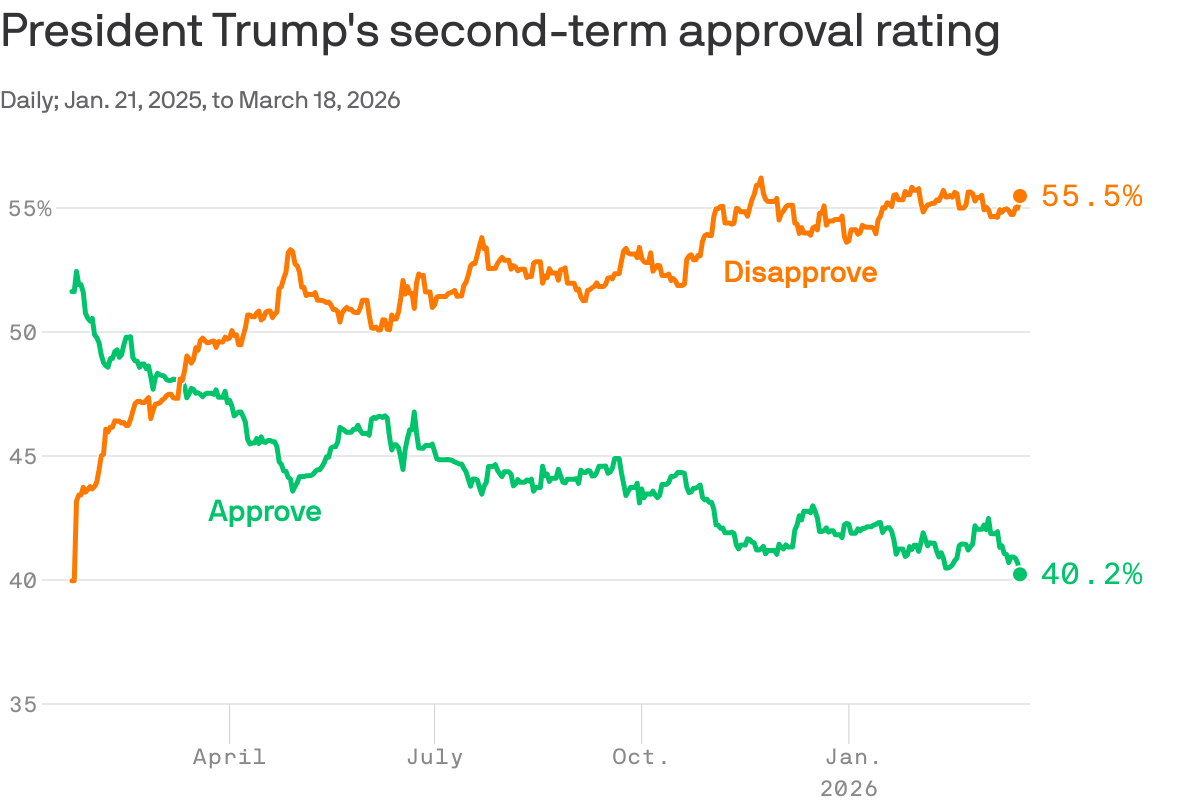
Falling approval: Meanwhile, President Trump's approval rating has fallen to 40%, its lowest point of his second term, according to data from pollster Nate Silver.
More News
✈️ Airport chaos deepens: As security lines snake out the doors of airports across the country, airline CEOs from Delta, United, American, and others sent an open letter to Congress this past week urging lawmakers to guarantee pay for TSA workers and air traffic controllers during shutdowns, as more than 300 TSA agents have already left the agency since the Department of Homeland Security was partially shut down February 14. Acting deputy TSA administrator Adam Stahl warned Thursday that some airports could face closures as unpaid screeners call out sick. Elon Musk has offered to pay TSA workers until the shutdown is over. Such an action would undercut Democrat efforts to leverage the airport chaos to get their own agenda passed to dismantle ICE, although questions remain as to the legality of Musk paying federal workers.

💸 National debt hits $39 trillion: The U.S. national debt crossed $39 trillion Thursday, just five months after reaching $38 trillion, with the pace of growth accelerating sharply. It took 200 years to reach the first $1 trillion.
🩺 Susie Wiles diagnosed with cancer: White House Chief of Staff Susie Wiles announced Friday that she has been diagnosed with early-stage breast cancer, saying she plans to continue working through treatment.
🗳️ U.S. Senate primary update in Texas: After neither incumbent John Cornyn nor challenger Ken Paxton received 50% of the primary vote, President Trump declined to endorse either of them, which means that the primary will advance to a runoff between the two.
⚖️ César Chávez legacy in tatters: A New York Times investigation published Thursday alleged that labor icon César Chávez sexually abused women and girls, including his longtime collaborator Dolores Huerta, who says she was raped by Chávez in 1966 and kept the secret for nearly 60 years. Within hours, annual Chávez celebrations across California, Arizona, and Texas were canceled, and governors in both states announced they would no longer observe César Chávez Day.
🏥 Maternal health by the numbers: According to new CDC data, even though the maternal mortality rate in the U.S. has improved slightly the last couple of years, the U.S. still has the highest maternal mortality rate in the developed world. And it’s currently more than double what it was in the early 80s, with 84% of deaths considered preventable.
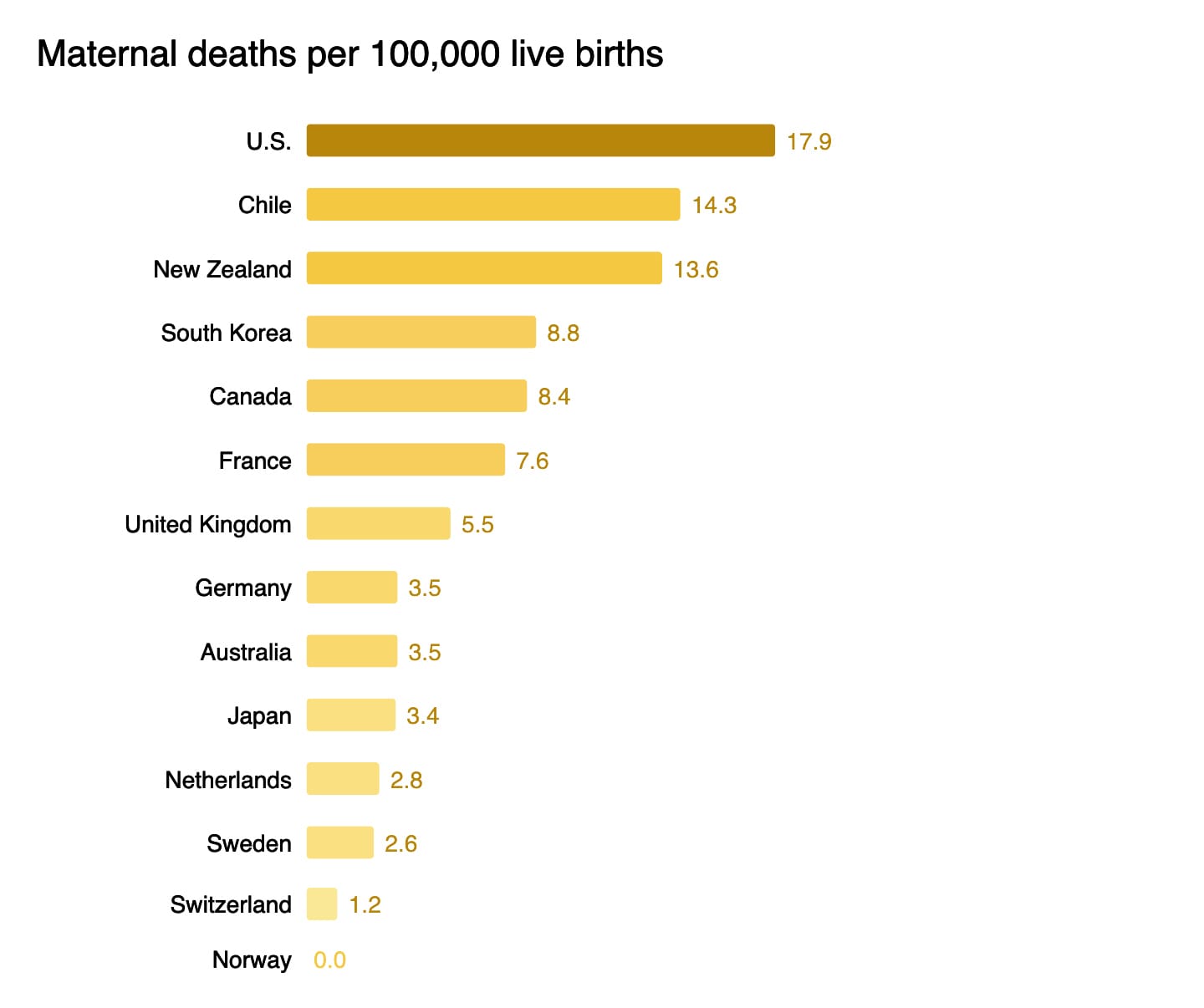
In the U.S., 98% of births occur in a hospital setting. Of that number, nearly 90% of births are attended by physicians, with midwives attending only 8.6%.
By contrast, in Sweden and Norway (two of the three lowest in maternal mortality), 98.7% of births are delivered by a midwife. In these countries, midwives are the main providers of maternal health care unless the pregnancy is deemed high risk.
Good News
🌟 New section beginning next week: Truth be told, most of the news that makes it into print is the bad news. Wars and car wrecks—crime and plane crashes. (Who reports on the thousands of airplanes that land safely every day?) But beginning next week, we promise to end each newsletter with a little something to brighten your spirits.
P.S. Have a story you want us to write on? We’d love to hear from you! Simply respond to this or any of the emails.
P.S.S. For those of you who asked, the yellow words throughout the newsletters aren’t serendipitous touches of color. They’re hyperlinks to corroborating sources.